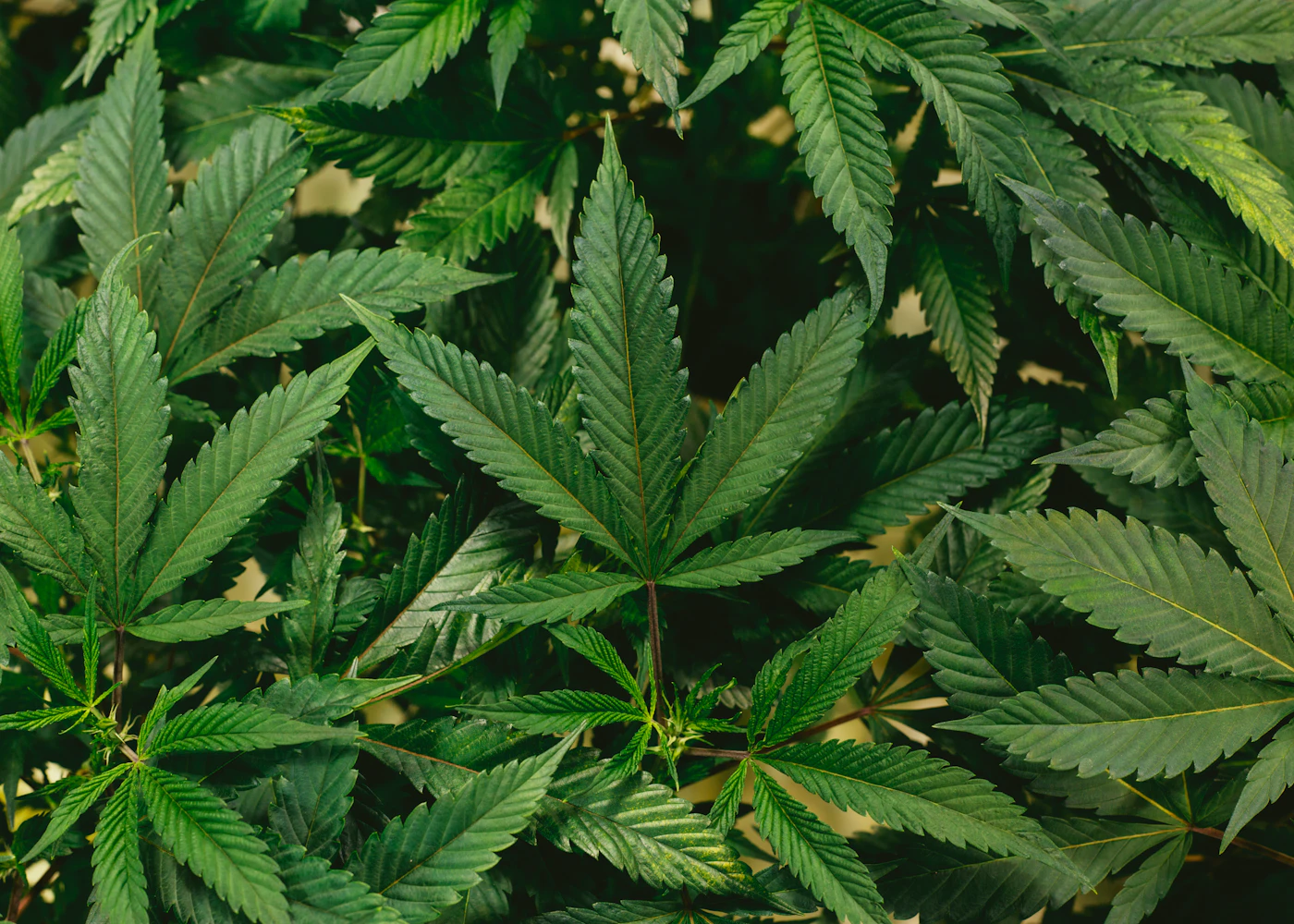
You can be the only person in your friend group who enjoys cannabis and still share that interest with millions of people elsewhere. Finding those people can matter for an ordinary reason: sometimes you want a conversation where you do not have to explain the starting point.
How many people use cannabis worldwide?
The UN Office on Drugs and Crime’s World Drug Report 2026 estimates that 256 million people used cannabis in 2024. Its estimated annual prevalence was 4.8% among people aged 15–64.
Read that as a population estimate, not a head count of daily smokers. Someone who used an edible once and someone with a regular smoking routine can both fall within a past-year measure. Nor does using cannabis automatically make someone a member of a particular culture, political movement, or online community.
The number is useful because it challenges a narrow picture of who a cannabis user must be. It does not tell us whether any particular person wants to socialize, feels isolated, or is looking for the same kind of friendship as you.
Being common does not make an interest easy to discuss
You might talk freely about cannabis with one friend and avoid the subject at work. Another person may use it for a medical reason they would rather keep private. A third may enjoy the music and humor around weed culture without consuming anything themselves.
There is evidence that fear of judgment can affect disclosure. In a 2024 exploratory study of 249 US adults, anticipated stigma was associated with less frequent disclosure of cannabis use to healthcare providers. The participants were recruited through an online convenience sample; this was not a representative survey of every cannabis user or a study of making friends.
Its relevance here is limited but important: a person’s hesitation to discuss cannabis does not necessarily mean the interest is trivial. They may be choosing carefully who hears about it. A welcoming community should let them make that choice, including how much of their name, location, or personal history they share.
Loneliness deserves attention without becoming a sales pitch
The World Health Organization’s 2025 report on social connection estimated that roughly one in six people worldwide experiences loneliness. That is a general-population finding. It is not evidence that one in six cannabis users is lonely, or that cannabis causes or resolves the feeling.
WHO also distinguishes loneliness from social isolation: one concerns the gap between the relationships you want and the ones you feel you have; the other concerns a lack of social contact. You can spend an evening alone and enjoy it. You can also have a busy group chat and still wish somebody would ask how your week actually went.
For an online cannabis community, the useful question is therefore smaller than “How many members do we have?” It is whether people can find a conversation they want to return to. A service such as Smokie can offer introductions and ways to keep in touch. That does not make it a treatment for depression or a proven loneliness intervention.
What recognition looks like in an ordinary conversation
Recognition does not need a speech about the size of the cannabis community. It can sound like:
These are examples to adapt, not research-backed scripts. Their purpose is to make room for the person beyond the shared interest.
Finding your corner of the 420-friendly community
Before joining a space, decide what you want from it. A public discussion board suits a question you want several people to answer. A local hobby group offers repeated contact around an activity. A one-to-one video chat gives two people room to talk without keeping up with a roomful of voices.
Smokie focuses on that individual introduction, with Android and browser users in the same matching community. Profiles, friend requests, and messages give a good conversation somewhere to continue. Availability depends on who is online, and a match is the beginning of getting to know someone, not proof that you will click.
A useful first step is simply to bring one interest beyond cannabis: a song, a hobby, a question about another country. The global number explains how broad the audience is. The next conversation is where you find out what you have in common with one person.
Published by Smokie. Research checked October 21, 2026. The studies above describe population estimates, healthcare disclosure, and social connection; none evaluates Smokie’s effect on loneliness or mental health.